From Hunting Tradition to Sustainable Conservation in Eswatini

The lion, symbol of our King (Ingwenyama), and the matriarch elephant, symbol of our Queen Mother (iNdlovukazi), both appear on the Eswatini national crest. During the colonial period, both species became locally extinct.

It was unthinkable that neither of these important animals was present in the then Swaziland at the time of independence from the British Empire. Their absence provided an additional reason for restoring both species to Swaziland. The elephant returned in 1986 and the lion in 1994, both from Kruger National Park. Hlane Royal National Park is now home to both lion and elephant, although it is too small to support free-roaming populations of these species.

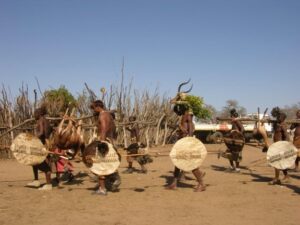
Butimba: The Royal hunt and its significance

Hlane Royal National Park plays an important role in the cultural heritage of the Kingdom of Eswatini. It provides an overflow of animals from the core conservation area of the park into an adjoining dispersal

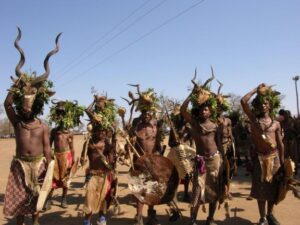
Different species of game carried by regiments

buffer zone, which is the traditional Royal hunting ground of the nation. It is in this area that the Butimba, the Royal Hunt, is occasionally called by the King, and every liSwati (the demonym used to describe a person from Eswatini) is welcome to participate.

Butimba literally refers to a hunting expedition. Conservation literature on Swati culture describes the Royal Hunt as a tradition that has been practiced for centuries, during which the King and his regiments hunted game for the royal household and the nation. The Butimba also provides game meat, skins and other materials used in traditional ceremonies and attire.

By 1966, however, wildlife populations had become so depleted that the traditional hunt had lost much of its practical purpose. This created a fundamental challenge: how could a hunting tradition be maintained when there was almost nothing left to hunt?

Conservation intervention

Published conservation history records that King Sobhuza II (1921-1982) recognized the cultural importance of the Royal Hunt and ordered the protection of the Hlane area, with Ted Reilly entrusted with its stewardship. The underlying principle was essentially to protect the breeding stock so that there would be a surplus in the future. This philosophy transformed the relationship between Butimba and wildlife.

The protection of Hlane allowed wildlife populations to recover. Today, Hlane is Eswatini’s largest protected area, and Big Game Parks manages it on behalf of the King and the nation. The park contains elephants, rhinoceroses, lions, leopards and numerous other wild species. Butimba survived because the wildlife survived. Wildlife conservation therefore became a means of conserving the cultural institution itself.

Interdependence of culture and nature

Regiments return with game from hunting assignment.

The modern Butimba is therefore based on the principle that there must be a healthy wildlife population from which a controlled harvest can be made without destroying the population.

The King has traditionally been associated with the welfare of the Kingdom and its people. Consequently, the Royal Hunt places the King and the traditional age regiment, known as Libutfo, directly within the landscape from which food and other natural resources are obtained. This is significant because Swati culture has historically been closely connected to the natural environment. Eswatini’s biodiversity strategy specifically identifies Butimba as an example of the country’s socio-cultural relationship with biodiversity. The biodiversity strategy makes an important observation: if the antelope species in the hunting area were exterminated, Butimba itself would eventually disappear. In other words, the survival of the cultural practice depends on the survival of the ecosystem.

Kushisa tikhotsa: Managing the habitat

“Kushisa tikhotsa” otherwise known as controlled burning, is an important part of the ceremony. Its purpose is to remove old vegetation under controlled conditions so that new vegetation can grow and provide nutritious grazing for wildlife. Today’s ceremony can therefore be understood as having two closely connected dimensions: “Kushisa tikhotsa”, which involves managing the habitat, and controlled hunting, which involves managing the wildlife population. Together, these practices are intended to support a sustainable ecosystem. Modern Butimba can consequently be understood as a ceremony involving wildlife, environmental conservation, and the relationship between people and nature, rather than hunting alone.

Conclusion: Preserving Butimba through conservation

There is a fascinating paradox at the heart of Butimba’s history: hunting nearly destroyed the wildlife resource on which the hunt depended. As game numbers declined, Butimba lost much of its practical foundation. The response was not necessarily to abandon the tradition permanently. Instead, conservation created the conditions under which the tradition could survive and develop a new ecological dimension.

The history of Butimba therefore demonstrates a close relationship between culture and conservation. The survival of the Royal Hunt depends on the survival of wildlife and its habitat, while the continuation of the tradition provides a cultural reason to value and protect that natural heritage.

ADAPTATION IN THE MOUNTAIN KINGDOM: Biosafety for Climate Resilience And Food Security

Adaptation for the Mountain Kingdom of Lesotho is best centered around climate resilience for improved agriculture productivity that provides food security for the Basotho Nation. One of Lesotho’s greatest agricultural assets is its biological diversity. Traditional crop varieties, livestock breeds and locally adapted farming knowledge represent resources that have developed under the country’s particular environmental conditions. Over the years, climate change has created pressure to find crops and agricultural systems capable of tolerating new environmental conditions. Therefore, it has become essential to explore introduction of new biological technologies while taking appropriate safeguards (bio-safety) to prevent ecological risks, including effects on biodiversity.

For Lesotho, climate resilience is particularly relevant because agricultural production is affected by drought, changing rainfall patterns, land degradation, pests, soil constraints and other climate-related stresses. Modern biotechnology offers potential tools for addressing some of these challenges, for example through crops with improved resistance to particular climate stresses. However, the role of biosafety is to ensure that food security objectives are pursued safely and responsibly. Before introduction, cultivation or importation of a LMO (Living Modified Organism) or GMO (Genetically Modified Organism); appropriate assessment is required to understand potential effects on human health, biodiversity, agricultural ecosystems and socio-economic conditions. Therefore, Lesotho’s objective should not simply be to adopt as much biotechnology as possible, nor should biosafety be treated as a reason to reject technological innovation automatically. Instead, the purpose of a strong biosafety system is to provide evidence-based procedures for determining which technologies are appropriate, under what conditions and with what safeguards.

The principle is particularly important for a country whose agricultural economy is already vulnerable to environmental change. The country is surrounded by mountains and heavily dependent on climate-sensitive agriculture, climate change is not simply an environmental concern for Lesotho. It is a question of food, livelihoods, water and national resilience. The Kingdom of Lesotho faces increasing pressure from droughts, irregular rainfall, intense rainfall events, land degradation and other forms of climate variability. These pressures are particularly significant because much of the country’s agriculture depends on rainfall.

In this environment, adaptation requires more than improving irrigation systems or changing farming practices. It also requires Lesotho to carefully manage the technologies that could help agriculture respond to a changing climate. This is where bio-safety becomes important.

Therefore, Lesotho regards biosafety in the environmental context as an essential system of policies, laws, institutions, procedures and scientific measures that can be pursued to ensure that modern biotechnology, including genetically modified organisms (LMOs /GMOs), is developed, handled, transported, used and released in a manner that prevents or minimizes risk to biodiversity, the environment and to human health. For Lesotho, this is particularly important because the country has fragile mountain ecosystems, limited agricultural land, high dependence on natural resources and agriculture, and vulnerability to environmental degradation and climate variability. Therefore, biosafety should not only focus on whether a GMO is safe in isolation, but also consider its potential effects on local ecosystems, indigenous species, agricultural systems and livelihoods.

According to Mr. Maboi Mahula, a Senior Environmental Officer in the Department of Environment, “biosafety in practical terms, means conducting risk assessment before environmental release, appropriate containment and management measures, monitoring of approved activities, public awareness and participation, and enforcement of biosafety requirements” He also assets that agriculture is one of the areas where modern biotechnology may potentially contribute to improving productivity and increasing food security by improving climate resilience”. He further indicated that Lesotho has made progress in developing policies, strategies and institutional frameworks addressing climate change adaptation, disaster risk reduction, environmental management and sustainable development. However, implementation capacity remains an important issue.

Climate change and food security in Lesotho

Agriculture remains closely connected to the livelihoods of Basotho. Lesotho’s first Nationally Determined Contribution noted that rain-fed agriculture is highly vulnerable to climate variability and that up to 80% of the population engages in some form of agriculture-related activity. The same document identified agriculture, water, forestry, health and other sectors as particularly vulnerable to climate change.
Source: Department of Agricultural Research

The vulnerability of agriculture is intensified by existing structural challenges. A World Bank assessment found that many farming households operate on small landholdings, while farmers also face limited access to irrigation, agricultural technologies, finance, infrastructure and technical services. Drought and intense rainfall contribute to soil erosion, declining soil quality and unstable agricultural production. This creates a difficult cycle. When rainfall is insufficient, crop yields can fall and households may have to rely more heavily on food purchases. When heavy rainfall occurs, erosion and flooding can damage agricultural land and infrastructure. Consequently, improving food security in Lesotho requires agricultural systems that can remain productive under increasingly variable conditions. Climate adaptation therefore has to consider not only how much food is produced, but also whether production systems can continue functioning when environmental conditions change.

Where biosafety enters the climate conversation

Biosafety is sometimes discussed mainly in relation to GMOs. However, in the context of climate adaptation, it can be understood more broadly as a governance mechanism that allows countries to evaluate biotechnology.
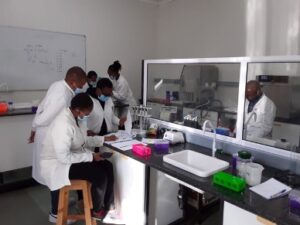
Source: National University of Lesotho Laboratory while managing its potential environmental and health risks.

Modern biotechnology may contribute to climate resilience through technologies designed to improve characteristics such as drought tolerance, resistance to pests and diseases, nutritional characteristics or agricultural productivity. These technologies do not automatically solve climate-related problems, and their suitability depends on local environmental, economic and social conditions. Nevertheless, they can form one component of a larger climate-smart agriculture strategy.

Lesotho’s own climate adaptation planning already recognizes the importance of technology and innovation. A 2024 Lesotho technology needs assessment for adaptation identifies climate-resilient agricultural technologies, including drought-tolerant crops, climate-resilient livestock breeds, precision agriculture and improved soil and water management. It also identifies research, technology transfer, capacity building and appropriate regulatory frameworks as important enabling conditions.

This is significant because technological innovation without appropriate governance can create new risks. Biosafety provides the institutional mechanism through which those risks can be assessed before technologies are introduced, released or used on a larger scale.

Lesotho’s biosafety framework

Lesotho is a Party to the Cartagena Protocol on Biosafety, an international agreement designed to address potential adverse effects of living modified organisms on biological diversity while also taking human health into account. Lesotho ratified the Protocol in September 2001.

The country also has a National Biosafety Policy dating from 2005, and the Department of Environment has undertaken projects aimed at strengthening institutional capacity for implementing biosafety and meeting obligations under the Cartagena Protocol. These efforts have included developing systems for applications, environmental monitoring, public awareness, participation and access to information.

However, translating policy into a fully functioning regulatory system has been a continuing challenge. The Biosafety Bill has gone through several stages of development. A 2022 version was tabled in the National Assembly and proposed establishing a National Biosafety Council and a Biosafety Tribunal, regulating GMOs and modern biotechnology, controlling their import and export, requiring permits for genetic modification activities and establishing risk-management and monitoring requirements. The parliamentary committee recommended that the Bill be passed with amendments.

More recently, the Biosafety Bill, 2025 appeared on the National Assembly’s legislative agenda for first reading in November 2025. Lesotho’s 2026 biodiversity reporting also identifies the Biosafety Bill 2025 and related biosafety initiatives as part of the country’s developing framework, while describing scientifically sound risk assessment of living modified organisms as still under development.

This legislative development matters for climate adaptation because biotechnology can only contribute responsibly to food security if there are credible systems for evaluating potential risks.

Biosafety and food security

Food security depends on more than the physical availability of food. It also depends on people’s ability to access food consistently and sustainably. Climate-resilient agriculture can contribute to food security by reducing the vulnerability of agricultural production to drought, pests, diseases and changing environmental conditions. Biotechnology may potentially contribute to these objectives, but it should be considered alongside conventional plant breeding, conservation agriculture, irrigation, soil restoration, improved extension services, crop diversification and indigenous knowledge.

The World Bank’s climate-smart agriculture assessment for Lesotho emphasizes precisely this broader approach. It describes climate-smart agriculture as an approach combining increased productivity, enhanced resilience and adaptation, and reduced emissions. Biosafety therefore should not be viewed as a standalone agricultural solution. Its role is to make technological innovation safer and more accountable within a wider food-security strategy.

For the Mountain Kingdom, biosafety represents an important intersection between environmental protection, agricultural development, scientific research and food security. A functioning biosafety framework could allow Lesotho to consider useful biotechnology while establishing procedures for identifying and managing potential risks to people, biodiversity and ecosystems.

The goal should therefore be neither unrestricted technological adoption nor technological avoidance. It should be responsible innovation: using scientific knowledge and biotechnology where appropriate, while maintaining strong systems for risk assessment, monitoring, transparency and public participation.

 

From Communities to Collective Action: Botswana Takes a Historic Step to Strengthen CBNRM

The Ngamiland Council of Non-Governmental Organisations (NCONGO), in collaboration with its partners; Community Leaders Network of Southern Africa (CLN), Ministry of Environment and Tourism and North West District Council – Ngamiland CBRNM Forum, proudly concluded the 2026 Community-Based Natural Resource Management – CBNRM Forum, marking a significant milestone in Botswana’s community conservation journey.

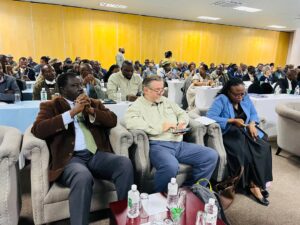
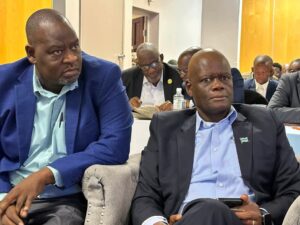
Held in Maun, the two-day forum brought together more than 200 participants from across Botswana, including representatives of Community-Based Organizations (CBOs), Community Trusts, governmentinstitutions, civil society organizations, traditional leaders, conservation practitioners, development partners, and private sector stakeholders. The forum also welcomed delegates from Zambia (Zambia CBNRM Association), Zimbabwe (Campfire), and Namibia (Namibian Association of CBNRM Support Organisations – NACSO), who shared valuable experiences and lessons from their well-established national CBNRM structures, providing an opportunity for regional learning and collaboration.

The forum was designed to strengthen dialogue on community-led natural resource management, promote knowledge exchange, and identify practical solutions to challenges affecting rural communities that depend on natural resources for their livelihoods. Through presentations, panel discussions, and interactive engagements, participants explored opportunities to enhance governance, strengthen community institutions, improve benefit-sharing mechanisms, and ensure that communities remain central to the management of Botswana’s natural resources.

A Landmark Achievement

The defining outcome of the forum was the establishment of the National CBNRM Association, a long-awaited and transformative platform designed to bring together Botswana’s CBNRM institutions under a shared national voice. Beyond creating a formal structure for collaboration, the Association represents an important step towards strengthening community participation, institutional coordination, and collective advocacy in the governance

of Botswana’s natural resources. The Association represents a significant step towards improving coordination among community organizations, strengthening advocacy, promoting good governance, and creating a unified platform through which communities can engage government, development partners, conservation organizations, and the private sector on matters affecting community-based natural resource management.

To lead this important process, forum delegates elected a 10-member Interim Committee representingCBOs from across Botswana. The committee has been mandated to establish the Association over the next twelve months.

The Road Ahead

The Interim Committee has been entrusted with several key responsibilities, including:

  • Drafting the Constitution of the National CBNRM Association.
  • Preparing and submitting the Association’s registration documents.
  • Developing governance and corporate governance frameworks.
  • Designing a resource mobilization strategy to support the Association’s sustainability.
  • Developing a communication and stakeholder engagement strategy.
  • Preparing a report with recommendations from the National CBNRM Forum for presentation to Government and other stakeholders.
  • Organising and convening the inaugural General Assembly to adopt the Constitution and elect the first National Executive Committee.

These deliverables will establish a strong institutional foundation for a sustainable and nationally representative Association capable of advancing the interests of CBNRM across Botswana.

A New Chapter for Community Conservation

For many years, Community Trusts and CBOs have made invaluable contributions to conservation, biodiversity protection, eco-tourism, and rural livelihoods. However, the absence of a unified national body has limited opportunities for coordinated advocacy, peer learning, and collective representation.

The National CBNRM Association marks the beginning of a new chapter, one in which communities will have a stronger national platform to share experiences, influence policy, promote good governance, and collectively advance sustainable natural resource management.

The Association is expected to strengthen collaboration among CBNRM practitioners while fostering partnerships that support community empowerment, biodiversity conservation, and inclusive socio-economic development.

NCONGO’s Commitment

As the Secretariat of the forum, NCONGO remains committed to supporting community-led conservation initiatives and strengthening the capacity of CBOs across Botswana. The successful convening of the forum demonstrates the power of collaboration and reinforces the importance of creating platforms where communities can shape the future of natural resource governance.

NCONGO extends its sincere appreciation to all participants, speakers, partners, funders, government representatives, and regional delegates, whose contributions made the forum a resounding success.

The Association will be more than the creation of a new institution; it will be the beginning of a united movement that will empower communities, strengthen conservation efforts, and ensure that Botswana’s natural resources continue to benefit present and future generations.

Together, we are building better communities.

7 Reasons a UK Trophy Hunting Import Ban Is a Bad Idea

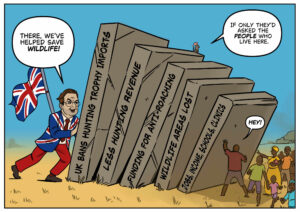
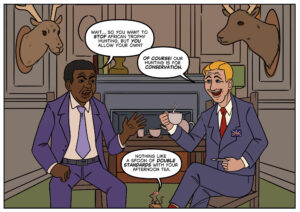
The proposed UK trophy hunting import ban, though framed as a compassionate morality play, risks doing far more harm than good by substituting Western emotion for African evidence. Across Southern Africa, wildlife is not an abstract ideal but a lived reality requiring active management. Implementing a blanket import ban exposes a deep-seated ‘white savior’ complex and neocolonial undertones in London-based policymaking, where critical decisions are made without consulting those most affected.

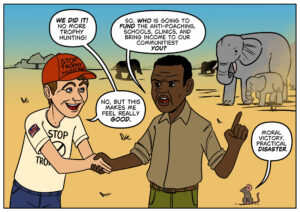
When international policies strip away the economic value of wildlife, they do not preserve it. Instead, they dismantle the funding that drives successful conservation and supports rural economies. This high-stakes legislative move threatens the livelihoods of millions of rural Africans, abandoning local communities to bear the heavy costs of conservation entirely alone. Ultimately, understanding these complex dynamics highlights the 7 Reasons a UK Trophy Hunting Import Ban Is a Bad Idea:

  1. It targets the wrong problem

For the species affected, trophy hunting is not the main threat. Habitat loss, land conversion, poaching, and retaliation linked to human-wildlife conflict are far bigger risks — and that is where the focus needs to be.

  1. It could hurt the wildlife it aims to protect

Regulated hunting helps pay for rangers, anti-poaching work, roads, monitoring, and wildlife management. Remove that income, and protection systems weaken. In practice, a ban could do the opposite of what it intends: less funding can mean fewer patrols, more poaching, poorer habitat management, and ultimately less wildlife.

  1. It hurts rural communities

Hunting revenue also supports jobs, household income, and community services such as schools and clinics in remote areas where tourism is often not feasible, and few other economic opportunities exist and removing that income would have devastating impacts on many rural communities.

  1. It can reduce tolerance for dangerous wildlife

Living with elephants, lions, crocodiles, and other wildlife can carry real costs. When benefits disappear but risks remain, support for wildlife can fall, and communities may retaliate against animals that raid crops or kill livestock.

  1. It can lead to land-use change

If people living alongside wildlife are only bearing the costs of coexistence, and see no benefits in return, there is a real risk that animals will be removed, and land converted to farming, livestock, or other uses. That can mean less space for nature.

  1. It ignores African voices

This debate is not happening in a vacuum. Decisions made in London affect people and wildlife thousands of miles away. The communities and governments most affected should be consulted, not treated as an afterthought.

  1. The UK already has strict controls

The UK does not allow trophy imports without checks. In practice, trophies can only be imported where they are legally sourced and where the hunt has demonstrated proven conservation value. A blanket ban would sweep away that targeted approach, and with it the conservation value that the current system can support.

The better question

This debate should not be about what sounds good in Britain. It should be about what works in practice for wildlife, what is fair to people who live with wildlife every day, and what is supported by peer-reviewed evidence?

References:

  • Challender, D. W. S., Cooney, R., Biggs, D., Dickman, A., Milner-Gulland, E. J., Redford, K. H., & Roe, D. (2024). Evaluating key evidence and formulating regulatory alternatives regarding the UK’s Hunting Trophies (Import Prohibition) Bill. Conservation Science and Practice, 6(10), e13220. https://doi.org/10.1111/csp2.13220
  • Commission Regulation (EC) No 865/2006 of 4 May 2006 laying down detailed rules concerning the implementation of Council Regulation (EC) No 338/97. Retained in UK law post-Brexit. https://www.legislation.gov.uk/eur/2006/865
  • Cooney, R., Freese, C., Dublin, H., Roe, D., Mallon, D., Knight, M., Emslie, R., Pani, M., Booth, V., Mahoney, S., & Buyanaa, C. (2017). The baby and the bathwater: Trophy hunting, conservation and rural livelihoods. Unasylva, 68(249), 3–16. Food and Agriculture Organization of the United Nations (FAO). https://www.fao.org/3/i7337en/i7337en.pdf
  • Council Regulation (EC) No 338/97 of 9 December 1996 on the protection of species of wild fauna and flora by regulating trade therein. Retained in UK law post-Brexit.
  • Department for Environment, Food & Rural Affairs (DEFRA). (2021). Ban on the import of hunting trophies: Impact assessment. https://publications.parliament.uk/pa/bills/cbill/58-03/0026/HuntingTrophies(ImportProhibition)BillImpactAssessment.pdf
  • Intergovernmental Science-Policy Platform on Biodiversity and Ecosystem Services (IPBES). (2019). Summary for policymakers of the global assessment report on biodiversity and ecosystem services. IPBES Secretariat. https://ipbes.net/globalassessment
  • IUCN Sustainable Use and Livelihoods Specialist Group (SULi), CEESP, & SSC. (2016, updated 2023). Informing decisions on trophy hunting: A briefing paper regarding issues to be taken into account when considering restriction of imports of hunting trophies. IUCN.
  • Jaureguiberry, P., Titeux, N., Wiemers, M., Bowler, D. E., Coscieme, L., Golden, A. S., Jacob, U., Takahashi, Y., Settele, J., & Díaz, S. (2022). The direct drivers of recent global anthropogenic biodiversity loss. Science Advances, 8(45), eabm9982. https://doi.org/10.1126/sciadv.abm9982
  • Lindsey, P. A., Roulet, P. A., & Romanach, S. S. (2007). Economic and conservation significance of the trophy hunting industry in sub-Saharan Africa. Biological Conservation, 134(4), 455–469. https://doi.org/10.1016/j.biocon.2006.09.005
  • (2022, February 14). Conflicting attitudes around the trophy hunting ban. https://www.survation.com/conflicting-attitudes-around-the-trophy-hunting-ban
  • Vorhies, F. (2024). Elephant in the Room: Why a Trophy Hunting Ban Would Hurt Conservation and Development. African Wildlife Economy Institute & Institute of Economic Affairs. https://iea.org.uk/publications/elephant-in-the-room/

CLN to Participate in the AICA General Assembly 2026

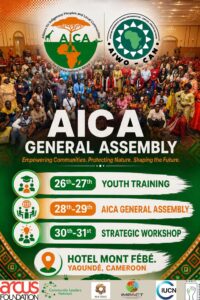
We are proud to participate in the AICA General Assembly 2026, taking place from 28–29 May 2026. The Assembly, convened by the Alliance for Indigenous Peoples and Local Communities for Conservation in Africa (AICA), brings together Indigenous Peoples and Local Communities (IPLCs), conservation leaders, and partners from across Africa.

For Southern Africa, conservation is more than protecting nature – it is about protecting land rights, culture, livelihoods, and community knowledge systems. Indigenous communities continue to play a vital role in safeguarding biodiversity and promoting sustainable environmental practices.

As a proud partner of AICA, CLN values this important platform for collaboration, advocacy, and regional solidarity. The Assembly presents an opportunity to amplify Southern African voices and strengthen community-led conservation approaches that place people, nature, and justice at the centre of sustainable development.

CLN looks forward to engaging with partners across Africa to advance inclusive conservation and Indigenous rights for present and future generations.

Announcing Mr. Norman Rigava as Executive Director of CLN

Announcement of Norman as Director of CLN

The Community Leaders Network is pleased to announce the appointment of Mr. Norman Rigava as the Executive Director of the CLN, marking a pivotal moment in the Network’s institutional growth and strategic direction. This appointment was affirmed during a critical Executive Committee and staff strategic meeting held in Windhoek, Namibia, from 14 -16 January 2026, convened for strategic reflection, induction, and forward-looking discussions on CLN’s priorities in the SADC region.

Mr. Rigava brings over three decades of distinguished leadership in conservation and development, with extensive experience in Natural Resources Management across Southern, West, Central, and East Africa. His career spans senior roles within government institutions and international non-governmental organizations, where he has consistently advanced inclusive, community-centered, and rights-based approaches to land and natural resource governance.

Prior to joining CLN, Mr. Rigava provided critical technical expertise to the WWF KAZA TFCA Programme, contributing to transboundary conservation initiatives and strengthening environmental safeguards, monitoring, and accountability frameworks.

As Executive Director, Norman will be instrumental in aligning CLN’s activities with its Strategic Framework. His leadership ensures the organization remains steadfast in its core mandate, which is empowering CLN’s national networks and their constituent members to drive sustainable, community-led impact across the continent. Please join us in welcoming Norman to the helm.


Dr. Rodgers Lubilo

President of CLN

Evidence Over Emotion

Why a UK Hunting Trophy Import Ban will Harm African Communities and Wildlife:

August 2025

In June 2024, the Labour Party pledged in its election manifesto to introduce a ban on the import of hunting trophies to the United Kingdom. Now elected to government, that commitment could soon shape legislative proposals with far-reaching implications for international conservation efforts, local livelihoods, and Indigenous Peoples and Local Communities in Africa. This report has been compiled to inform that moment.

While the most recent legislative attempt — a Private Member’s Bill introduced by Conservative MP David Reed — failed to pass, the manifesto commitment signals continued political interest in the issue. We offer this document not in response to a specific bill, but in anticipation of one. Our goal is to ensure that any future policy debate is guided by science, inclusive of affected voices, and rooted in the realities of conservation on the ground — not just the sentiments of distant publics.

Evidence over Emotion Aug 2025

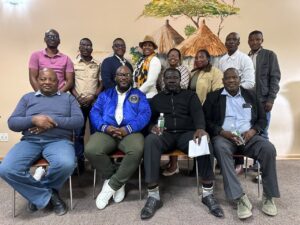
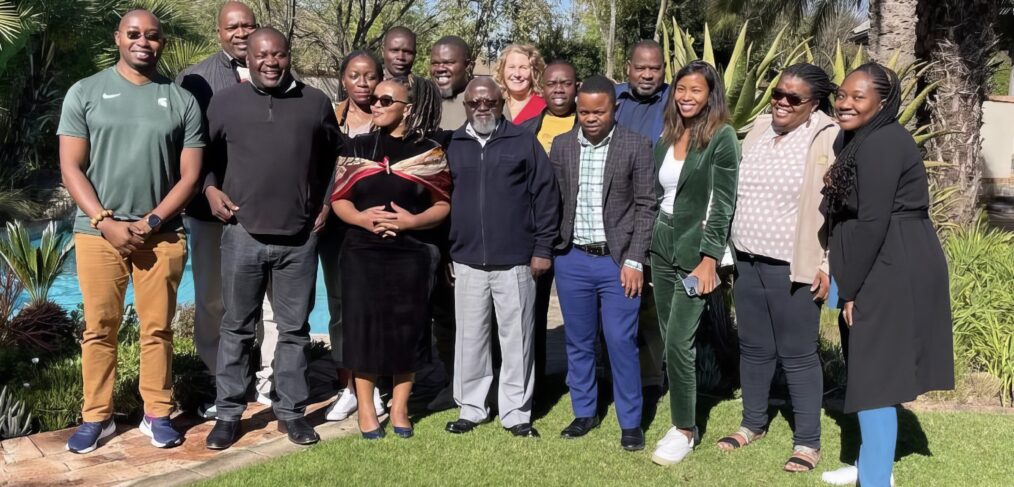
Group photo of the workshop participants.

Community Leaders Network of Southern Africa Strategy Workshop Report

In May 2023 the Community Leaders Network of Southern Africa (CLN) convened in Johannesburg, South Africa, to formulate their development strategy for the next six years. The workshop served as a platform for the CLN Board and key decision makers to collaboratively develop the framework of the strategy and a Theory of Change. Download the report here: (Africa Strategy Workshop Report.pdf)


Photo of Charles Jonga

Message from Community Leaders Network of Southern Africa on the Passing of Charles Jonga

It is with heavy hearts and deep sorrow that we note the passing of CLN Vice Chairperson Comrade Charles Jonga.


Charles was an icon, a legend and exemplary leader for community conservation. Comrade Jonga was not just a pillar for CAMPFIRE in Zimbabwe but an inspiration to young conservation leaders across Southern Africa.

Read More›
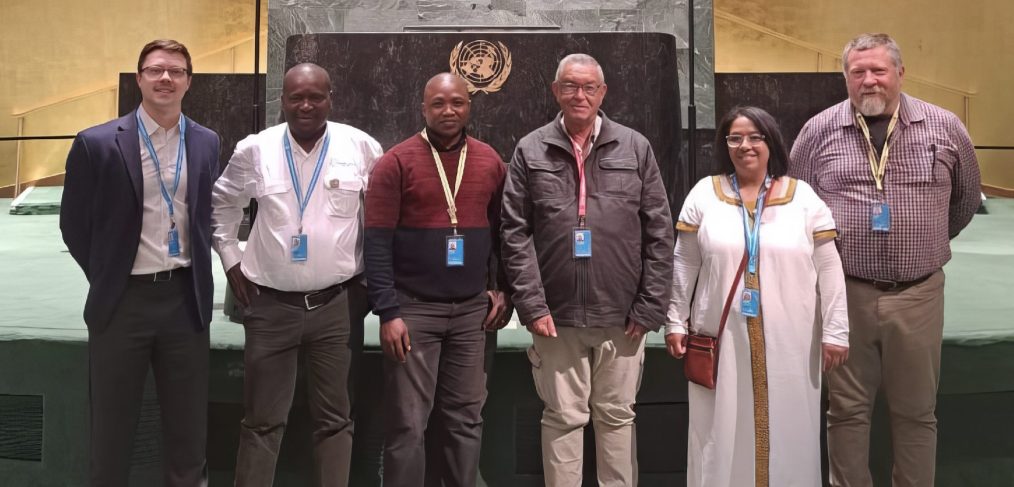
Six people posing in front of the UN emblem.

CLN sees opportunities at the United Nations Permanent Forum for Indigenous Issues

As the Chairperson of Community Leaders Network of Southern Africa, I participated in the recent 22nd Session of the United Nations Permanent Forum on Indigenous Issues (UNPFII) held in New York, USA. It was a real eye opener for me, as I started to appreciate the challenges, abuse and human rights infringements that over 6.7 million indigenous peoples around the world have had to endure. 

Read More›